Meng Guo

郭萌

Assistant Professor  ·  HKU

Department of Earth and Planetary Sciences

Research Group

Gaia Code Lab

Deciphering planetary habitability and the origin of life

About Gaia Code Lab

We are a theoretical research lab dedicated to understanding how habitable planets emerge, evolve, and reveal their histories through multidisciplinary modeling of geochemical signatures.

At the core of our work lies advancing our understanding of the coupled crust-mantle-atmosphere-ocean system; the planetary engine that regulates climate, recycles elements, and creates conditions for life. We build self-consistent multidisciplinary models that integrate geophysical, geochemical, geological, and astrobiological constraints, allowing us to simulate how a planet's interior and surface interact over billions of years.

Our research not only seeks profound revelations about our own origins but also opens a broader inquiry into the role life plays in shaping a planet. Ultimately, we aim to answer two fundamental questions:

Where do we come from?

How did Earth's coupled interior-surface system evolve to become habitable, and what does that tell us about life's emergence?

Are we alone?

Can we identify terrestrial and/or exoplanetary evolution paths that lead to life and develop transferable, predictive tools to recognize them?

Our Unique Approach

By linking planetary evolution models with geochemical observable models, we translate measurable data — isotope ratios, trace elements, and atmospheric composition — into insights about a planet's evolutionary trajectory, from its earliest magma ocean to its potential as a living world.

People thinking carefully about planet Earth.

Meet the students and postdoctoral researchers in my group and read about their research and careers.

Portrait of Dr. Zekun Meng

Postdoctoral Researcher

Dr. Zekun Meng

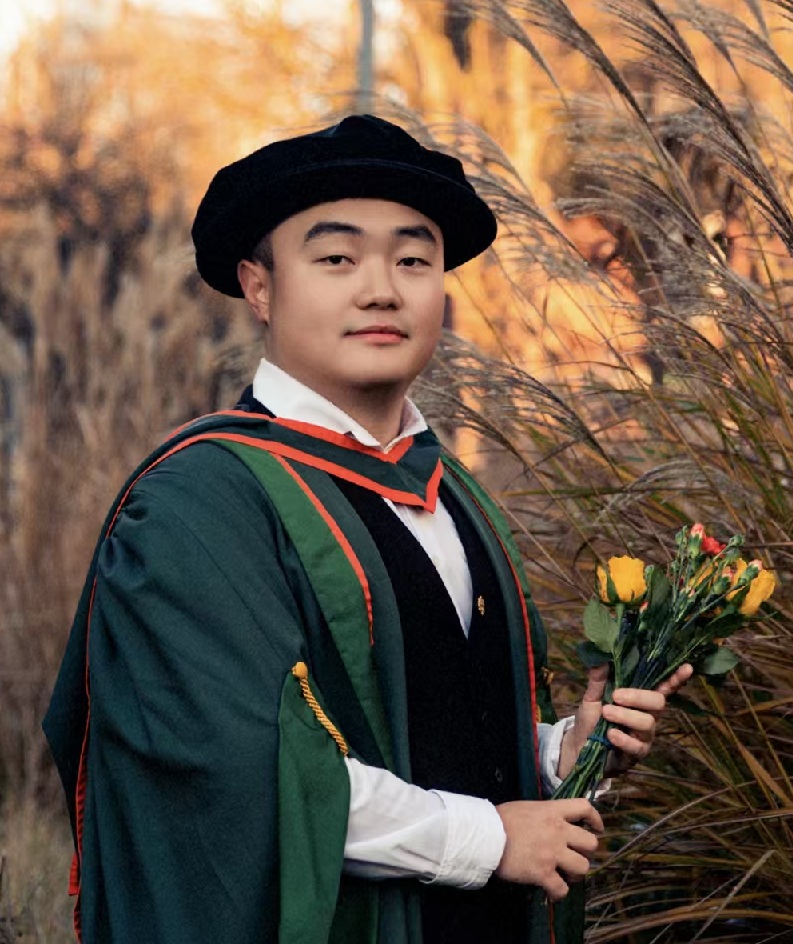
I am interested in Precambrian paleoenvironmental evolution and marine iron cycling. My research examines how iron was transformed, stabilized, and buried in ancient oceans, with a focus on the Proterozoic Eon and the Snowball Earth intervals. I combine sedimentary geochemistry, laboratory experiments, and numerical modeling to explore the links between marine iron cycling and Earth surface environmental change.

I am particularly interested in the processes that controlled iron precipitation, biological iron oxidation, and the distribution of different iron species and components in ancient seawater. These processes are central to understanding how iron was transported, transformed, stabilized, and ultimately buried in marine sediments, and how such mechanisms influenced the formation, decline, and reappearance of Banded Iron Formations (BIFs) through Earth history.

In addition, I study the evolution of Neoproterozoic Snowball Earth glaciations and their implications for marine iron cycling, particularly how extreme climate states may have altered ocean chemistry, iron supply, redox structure, and iron burial. By integrating geochemical records, experimental observations, and numerical models, my work aims to connect the mechanistic behavior of iron in seawater with large-scale geological patterns preserved in Precambrian sedimentary archives.


2025 Ph.D. in Geology and Geobiology, Northwest University, China
2021 M.S. in Geobiology, Northwest University, China
2018 B.S. in Geology, Northwest University, China
Portrait of Dr. Yuxuan Wang

Postdoctoral Researcher

Dr. Yuxuan Wang

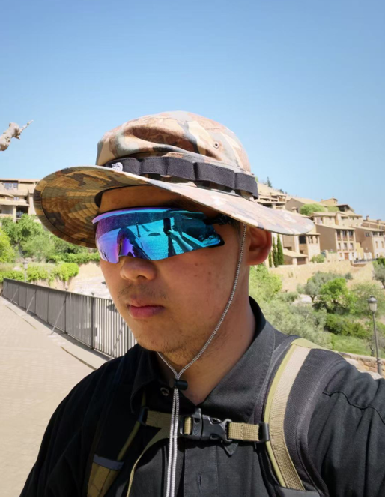
I study how redox conditions, nutrient cycling, and silicate weathering have shaped Earth system evolution and climate stability over deep time. By integrating geological observations and geochemical proxy records with Earth system models, my current project examines how supercontinent assembly and breakup alter weathering regimes, carbon-cycle feedbacks, and nutrient-redox coupling through the Phanerozoic.


2025 Ph.D. in Geochemistry, University of Leeds
2017 B.S. in Geology, China University of Geosciences

Portrait of Kunxiang Peng

PhD Student

Kunxiang Peng

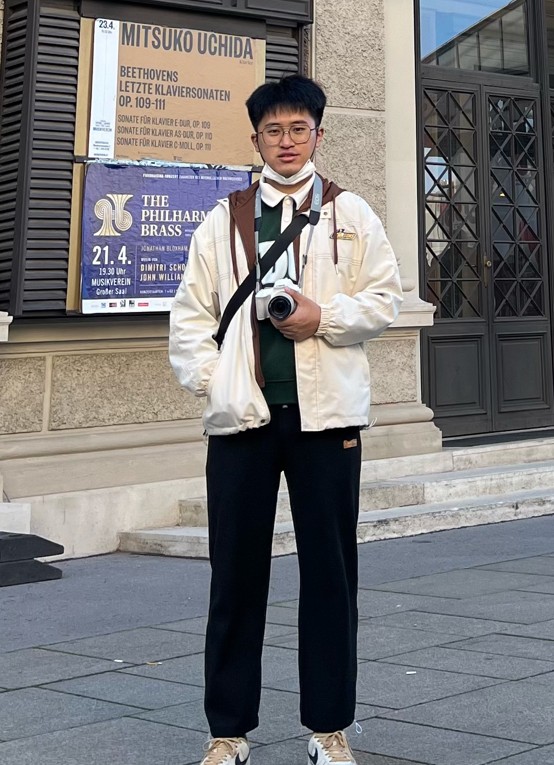
Hello, I am Kunxiang. I joined Prof. Guo Meng's research group in January 2026 to begin my Ph.D. studies. I completed both my undergraduate and master's degrees at UCL, and also spent one year as an exchange student at Caltech. After receiving a Ph.D. offer from MIT, I ultimately chose to join Prof. Guo's group due to my concerns about current U.S. policies and the broader development of the scientific community there.

My research interests focus on the development of early Earth environments and Earth system evolution. More specifically, I am interested in exploring the early growth patterns of the continental crust.


2026 HKU Presidential Ph.D. Scholar Programme
2025 MSci Earth Science, University College London, London, Britain

Portrait of Rahi Kashikar

PhD Student

Rahi Kashikar

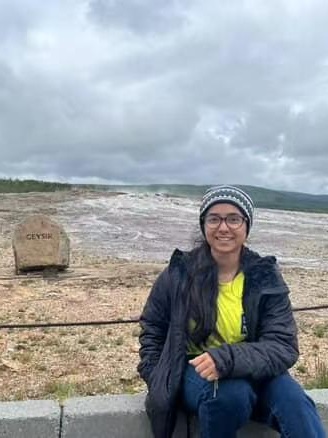
Originally from India, I graduated from Florida Institute of Technology with a dual degree in Astrobiology and Mathematical Sciences. I have previously conducted biogeochemical modelling to assess the impact of volcanism on Earth-like exoplanets. I have found great interest in applying novel computational and machine learning techniques to research problems followed by involvement in two major projects from my undergrad: super-resolution for remote sensing and hyperspectral image processing for Quantum Biology.

I am passionate about Astrobiology and in bringing novel statistical and computational approaches to this field. Having come to believe that Earth Sciences is the way for it, I have joined Dr. Guo's group to study the early Earth environment and complex coupled processes. With the aim to bridge the gap from habitable environments to origin of life, I will explore volcanic and impact environments on early Earth for my Ph.D.


2025 B.S. in Astrobiology and Mathematical Sciences, Florida Institute of Technology